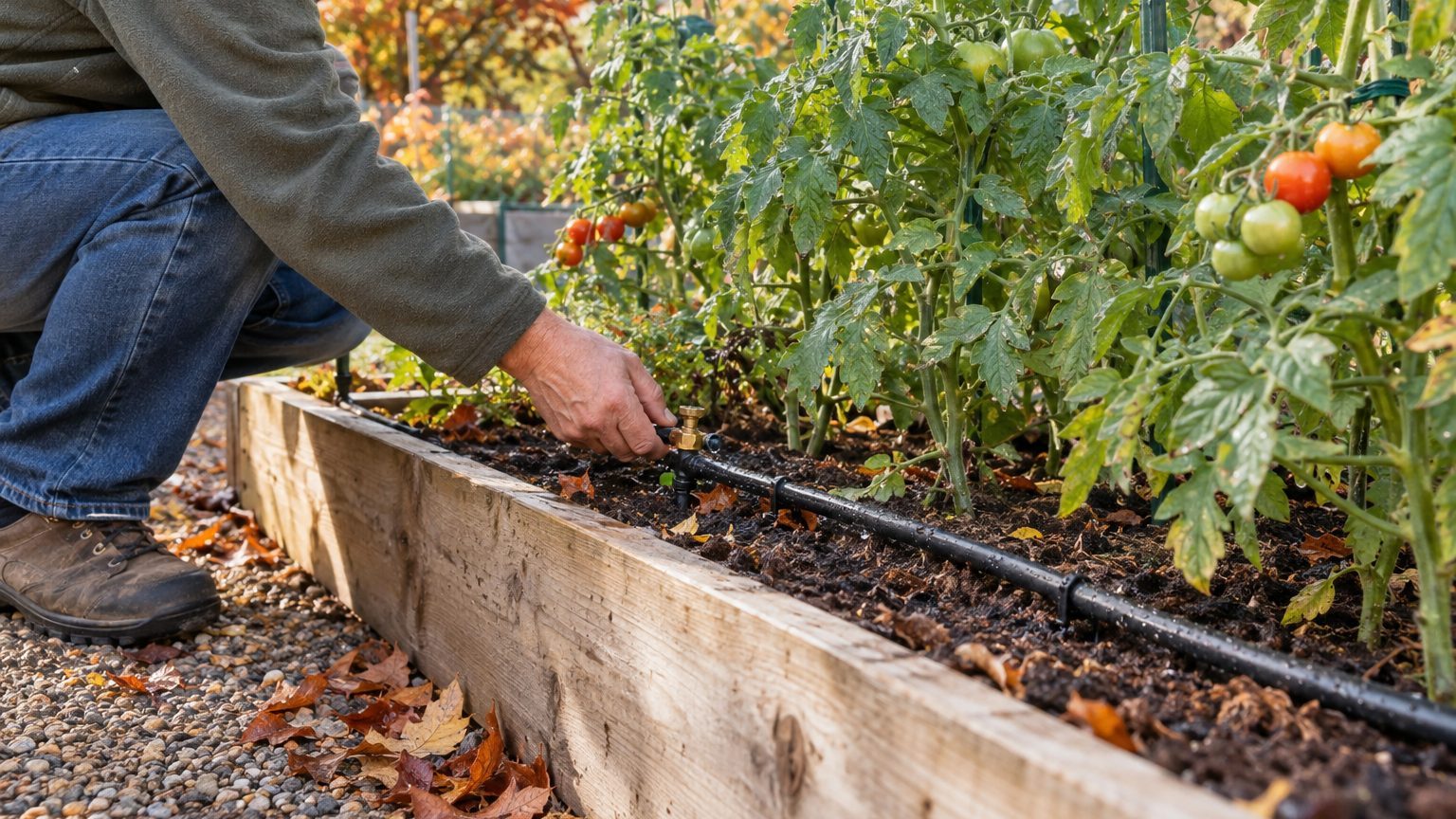
Drip irrigation systems use 20% to 50% less water than conventional sprinkler systems, according to the EPA’s WaterSense program. Washington State University Extension goes further and rates drip irrigation as 90–95% efficient, so nearly every gallon reaches a root. Overhead sprinklers can’t match that. Water is lost to wind and runoff before plants ever touch it.
The mechanics are simpler than most people expect.
How a drip irrigation system works
Water enters at the spigot, passes through a filter and then a pressure reducer before it reaches the tubing. The reducer matters because drip runs on very low pressure. Without one, emitters can be damaged and the system’s lifespan may be shortened. From there, flexible polyethylene tubing with emitters and low-volume sprays carries the water out to the beds and releases it slowly at the base of each plant.
Add a timer and the whole thing runs itself. The amount applied is controlled by the number of hours the system is on, and university horticulturists suggest running it early in the morning so it doesn’t compete with showers and other household water use. Newer controllers go a step further. Some can be set and operated from your phone.
Zones are worth planning from day one.
Splitting the garden into sections with their own valves lets you shut off one bed for repairs, or give thirsty tomatoes more water than the herbs next to them. Plants differ widely in what they need, and a single open line treats them all the same. Most failed first-time installs I’d point to skip this step and regret it by midsummer.
What a garden gains from it
Start with the water. In studies cited by Utah State University Extension, home owners noticed water savings of up to 75%. According to the EPA, translated to a household, water savings can amount to the equivalent of several backyard swimming pools each year.
Time is the quieter payoff. The same studies reported up to 90% time savings in watering and weeding, which makes sense once you think about it: weeds only sprout where the water goes, and drip leaves the aisles dry. Anyone who has stood in a vegetable patch with a hose for a while on a July evening can do the math on what that frees up.
Leaves stay dry, too.
Wet foliage invites fungal trouble, especially on tomatoes, squash and roses, and Iowa State University Extension lists reduced disease risk among the main reasons to switch. Slopes and heavy soils benefit as well. Unlike flood or sprinkler irrigation, drip systems suit any soil type or slope, because the slow trickle soaks in instead of running downhill.
Consider what a vegetable garden really needs. Typically it’s about one inch of water per week, from rain or irrigation. One inch over a 100-square-foot bed works out to a substantial amount of water. Delivered by hand-held sprinkler on a breezy afternoon, a good part of that never reaches the soil. Delivered by drip, almost all of it does.
Where it falls short, and how to start
Drip isn’t free of drawbacks. Washington State’s extension specialists are blunt about it: it costs more per unit of irrigated area to set up than any other alternative, and emitter plugging can be a major concern. A basic filter and a quick flush of the line ends each season go a long way toward preventing clogs. In cold climates, drain the lines before the first hard freeze, since water trapped in tubing will crack fittings.
Lawns are the other exception. Grass roots draw water across a wide, even area, so a drip line under turf rarely makes sense, although the EPA’s own webinar notes that subsurface drip irrigation can be used to irrigate turf efficiently in the right professional installations. For most homeowners, the practical split is drip for beds, shrubs, trees and containers, and efficient sprinkler heads for the lawn. A WaterSense labeled controller, which uses local weather data to decide when and how much to water, improves either side of that split.
Budget-conscious gardeners can begin with a soaker hose. It’s among the easiest drip-style systems to set up, and inexpensive. Lay it through a single raised bed this season, attach a timer, and see how the water bill and the weeding schedule respond before committing to a full network of tubing.
Scale matters here: many US homes have in-ground sprinkler systems, most still run on clock-based controllers that ignore the weather. Converting even the flower beds on those properties to drip would barely change how the lawn looks, and it would take a large bite out of what the hose bib spins through each summer.
Sources: extension.illinois.edu | extension.usu.edu | epa.gov